At our recent parents’ evening, we explored the idea that not all children communicate, learn, or respond in the same way. While this might seem obvious, it can be surprisingly powerful when we begin to apply it in everyday moments.
For example, you might notice that one child thrives on clear instructions, while another needs connection first. Meanwhile, another may prefer to jump straight into action. In other words, children often show us what they need, if we know how to look.
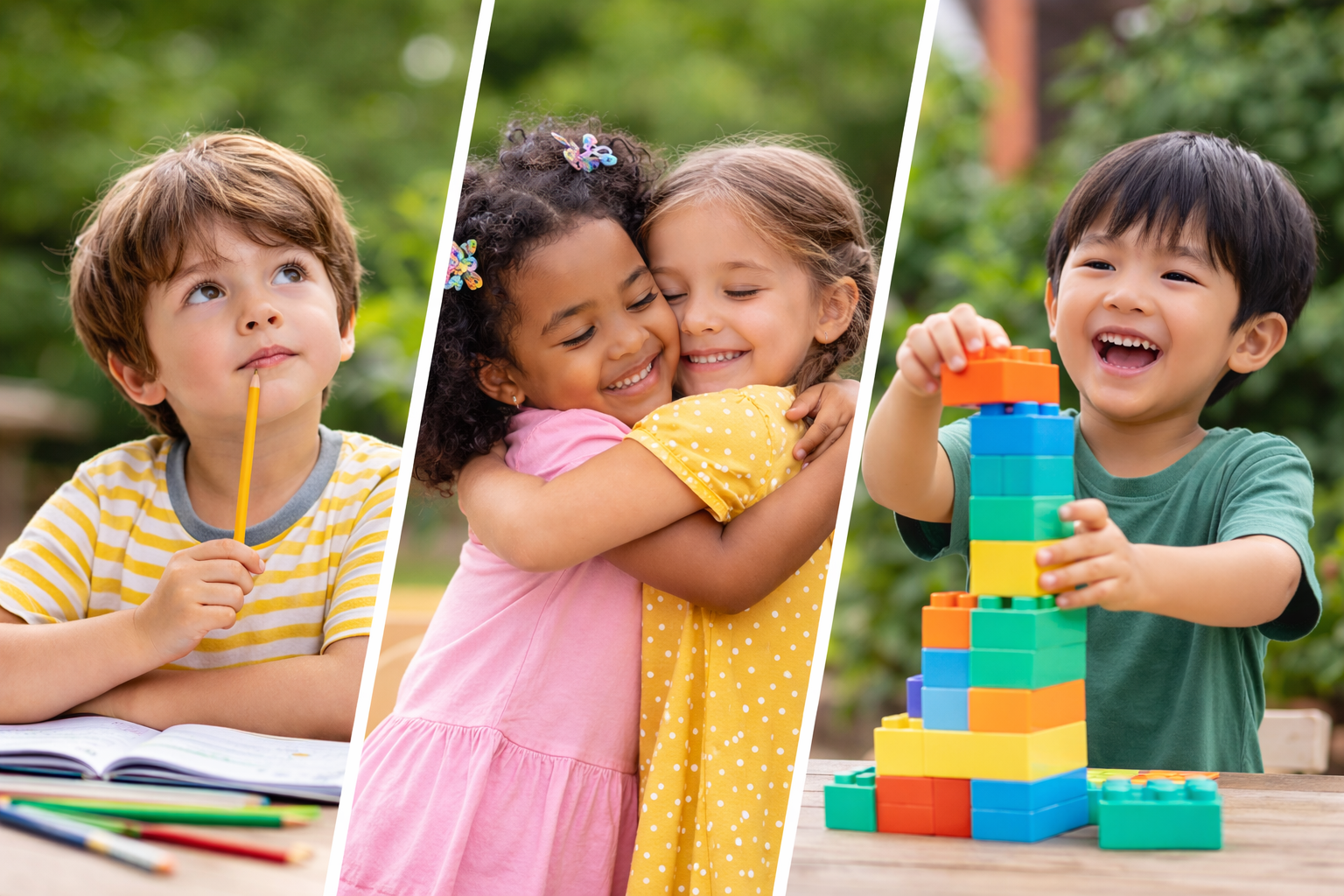
Rather than placing children into fixed “types,” it can be more helpful to think about how they tend to respond in the moment. With this in mind, a simple way to approach this is through three communication preferences:
Think, Feel, and Do.
Importantly, these aren’t labels, and they’re certainly not permanent. Instead, they are simply lenses that can help us better understand what a child might need from us right now.
🧠 The “Think” Child
Some children are natural processors. In particular, they like to understand, observe, and make sense of things before jumping in.
You might notice they:
- Ask lots of questions
- Pause before responding
- Prefer knowing what’s coming next
- Feel unsettled by sudden changes
So, what helps?
- Giving them time to process
- Explaining what’s happening and why
- Offering predictability and structure
As a result, communication lands best when it feels clear and thoughtful. They’re not being slow or hesitant; rather, they’re building understanding.
💛 The “Feel” Child
On the other hand, some children are deeply tuned into emotions, both their own and others’. For these children, connection is the starting point.
You might notice they:
- Seek reassurance or closeness
- React strongly to tone or mood
- Are sensitive to changes in relationships
- Thrive on encouragement and warmth
In this case, what helps is:
- Connecting before directing
- Acknowledging their feelings
- Using gentle, reassuring language
Because of this, how something is said matters just as much as what is said. When they feel safe and understood, everything else tends to follow.
⚡ The “Do” Child
Meanwhile, some children are natural action-takers. They learn best by doing, exploring, and jumping right in.
You might notice they:
- Act quickly, sometimes impulsively
- Prefer hands-on experiences
- Enjoy challenges and taking the lead
- Respond well to clear, direct guidance
Therefore, what helps includes:
- Keeping instructions simple and direct
- Offering opportunities for movement and action
- Providing boundaries with confidence and clarity
In contrast to “Think” children, long explanations can feel frustrating. Instead, they’re ready to learn through experience. Long discussions can feel like traffic lights stuck on red. They’re ready to go, and they learn best along the way.
🌈 The Most Important Thing to Remember
Of course, no child is just one of these.
In fact, a child might be:
- a “Do” child at the playground
- a “Feel” child at bedtime
- a “Think” child in new situations
As children grow and develop, these preferences naturally shift. Therefore, what we’re seeing is not a fixed personality, but a snapshot in time.
🌱 Why This Matters
So, why does this matter?
When we adjust how we communicate, even slightly, it can make a meaningful difference.
For instance:
- A child who needs time to think feels less pressured
- A child who needs connection feels more secure
- A child who needs action feels more understood
Ultimately, when children feel understood, they are more open to learning, engaging, and building relationships.
🤝 A Shared Approach
At Care for Kindies, we use these ideas to guide our interactions with children. At the same time, we remain curious and responsive to who they are in each moment.
Likewise, we encourage you to try this at home:
- Notice how your child responds in different situations
- Experiment with small shifts in your communication
- Stay open to the fact that their needs will change
Because, in the end, children aren’t one fixed way of being.
Instead, they are growing, adapting, and becoming, every single day.
And when we tune in to them, rather than label them, we give them the space to become exactly who they’re meant to be.
Book a tour to come and meet the team. We'd love to show you what being part of the Care for Kindies family is really like.
Or get in touch to find out more.